Fences that warp within two winters. Sheds that need re-treating every spring just to hold off the rot. Decking that looks tired by year three no matter how often it gets stained. Anyone who has maintained a garden built with the wrong materials knows how much time, money and waste goes into fighting a losing battle against the British weather.
2026 is seeing a shift away from that cycle. Garden structures are increasingly built with materials chosen to last decades rather than seasons, alongside surfaces that work with rainfall instead of shedding it. If you’re planning anything from a new patio to a full garden revival project, here are ten materials worth building with this year.
1. FSC-Certified Timber for Structures
For pergolas, garden pavilions and summer houses, slow-grown European larch and Scottish pine sourced under FSC certification are becoming the standard choice, and both hold up well against rot according to TRADA’s own species data. Paired with lighter, less toxic pressure treatments, these timbers resist rot for far longer without the environmental cost of harsher chemical processes.
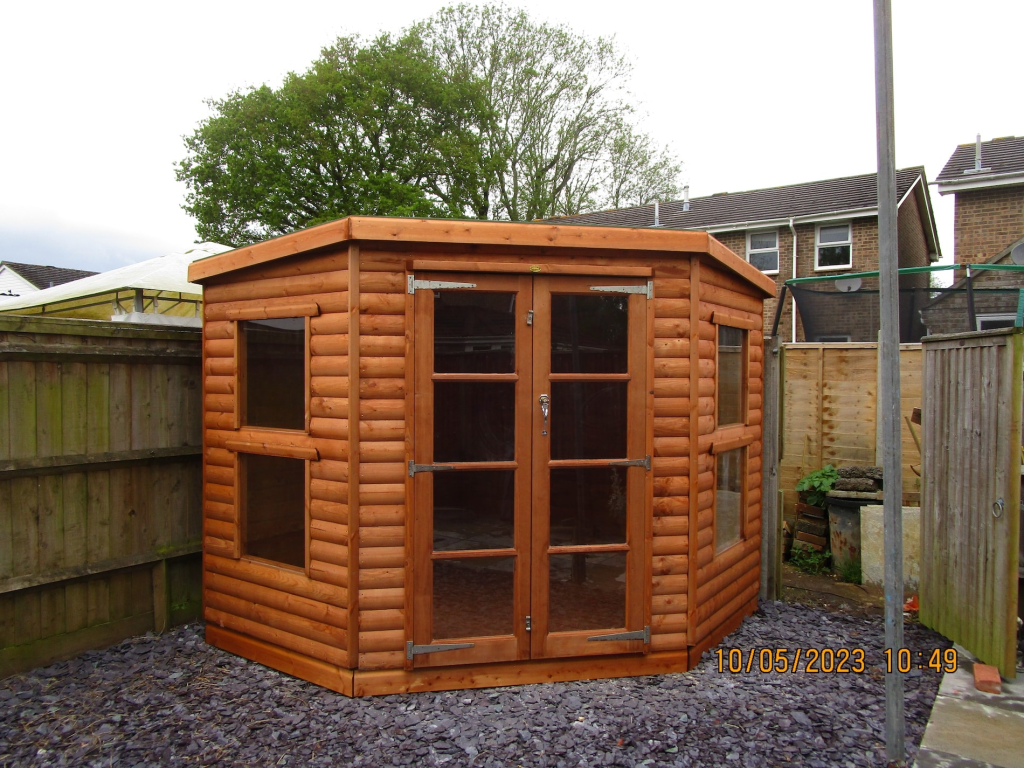
Image Source: https://elfords.co.uk/
2. Recycled Plastic Composite Decking
Composite decking made from reclaimed wood fibres and recycled plastics is replacing pressure-treated softwood on patios and raised terraces. It won’t rot, warp or need the yearly re-staining that timber decking demands, which cuts out a lot of chemical treatment over its lifetime.
3. Hempcrete for Garden Offices and Pavilions
Hempcrete, made from hemp hurd and a lime binder, is now used for garden offices and yoga pavilions as well as house extensions. It regulates temperature well, locks away carbon as it cures, and copes with damp better than standard blockwork. The UK Hempcrete Association has more information on it, and it’s worth checking the Planning Portal if the structure is more than a small outbuilding.
4. Rammed Earth for Retaining Walls
Rammed earth, compacted layers of soil, clay and sand, is a traditional technique having a resurgence for retaining walls and low-impact garden buildings. It often uses materials already on site, needs no manufacturing process, and has a layered look few other materials can match.
5. Reclaimed and Salvaged Bricks
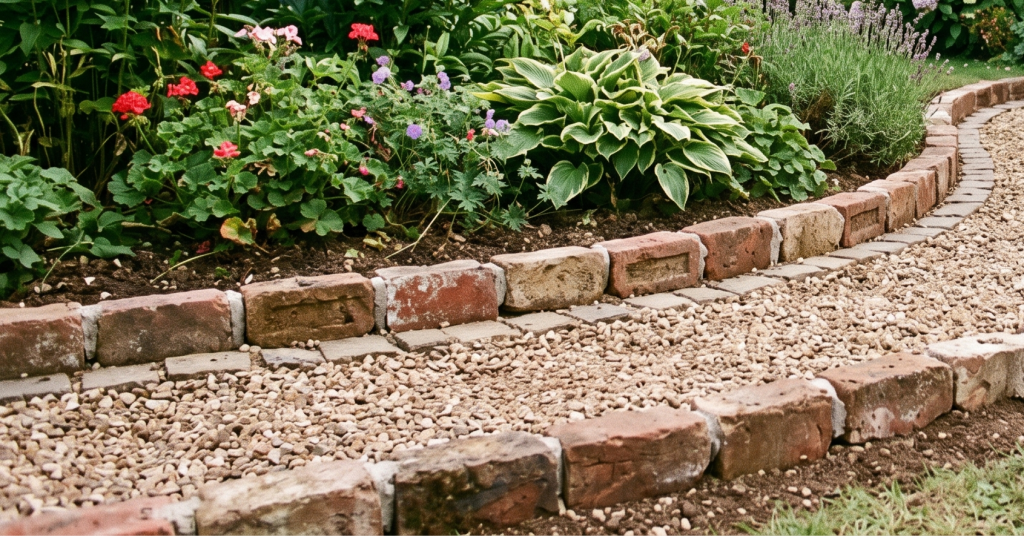
Salvaged bricks are being reused for raised beds, path edging and outdoor kitchens instead of ending up in landfill. They bring a weathered, established look to a new build straight away, and keeping them in circulation avoids the energy cost of firing new ones.
6. Reclaimed Flagstone
Large-format reclaimed flagstone, particularly Yorkstone, is popular for modern patios that need less upkeep than poured concrete. Because each slab already exists, choosing reclaimed over new avoids the quarrying and transport footprint that comes with fresh stone.
7. Clay Pavers
Clay pavers offer a warmer, more textured surface than concrete and suit small-format or herringbone paths particularly well. They’re fired from abundant natural clay, age gracefully rather than cracking, and need very little maintenance once laid.
8. Permeable Porous Paving
Resin-bound gravel, grass grids and interlocking permeable pavers let rainwater soak into the ground instead of running off into drains, which matters more each year as downpours get heavier. Susdrain has clear guidance on sustainable drainage for anyone planning a driveway or patio.
9. Natural Gravel and River Rock
Unwashed, naturally varied gravel and river rock suit drought-tolerant planting schemes, helping soil retain moisture and cutting down on the irrigation a traditional lawn needs. It’s a low-cost option that also reduces the amount of hard, non-porous surface in a garden.
10. Modular Recycled Plastic Liners
Recycled plastic liners are increasingly used inside wooden raised beds instead of chemical timber treatments or plastic sheeting. They protect the wood from constant contact with wet soil, which extends the life of the bed considerably.
Bottom Line
None of these materials are about following a trend for its own sake. Each one solves a real problem, whether that’s a shed that keeps rotting, a patio that floods after rain, or a raised bed that rots through every few years. Choosing well once, with materials built to last, turns out to be the more sustainable and the more practical option in the long run.